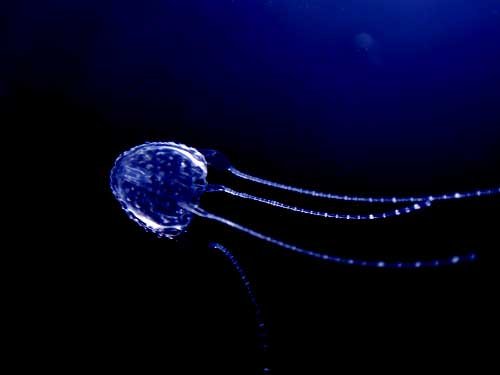
Statistical data is limited, but estimated fatality rate is effectively close to zero in modern tourism settings due to high awareness, prompt medical care & routine precautions.
Risk without a stinger suit is low but real. Risk with a stinger suit is very low.
The absense of statistics is because total case numbers are very small & even fewer are studied in detail.
Local reporting from QLD health alerts & regional news over recent years suggest that there are typically a handful to a few dozen suspected Irukandji stings per season in the Whitsundays/Great Barrier Reef region. Some seasons have very few or no confirmed cases, while others (particularly warmer, calmer summers) see small clusters, but stings are still considered sporadic compared to the large amount of people that visit the region. For reference there are approx 800,000-900,000 visitors to the Whitsundays every year & 2-2.4 million visitors to the Great Barrier Reef each year.
There are no consistently documented Irukandji deaths in the Whitsundays in the past 5+ years.
There are only a handful of suspected fatalities ever recorded in Australia, compared to hundred of stings.
Irukandji stings mainly occur when the skin is exposed. Stinger suits are widely used throughout the Whitsundays & are highly effective at reducing the already low risk, which is why they are standard practice during the warmer months.
This information is based on information found on Google. Although as much effort as possible has been made to ensure accuracy of this information, guests are encouraged do their own research & enquires to educate themselves on the risks.